 cohabit insuranceSmarter insurance for your strata building.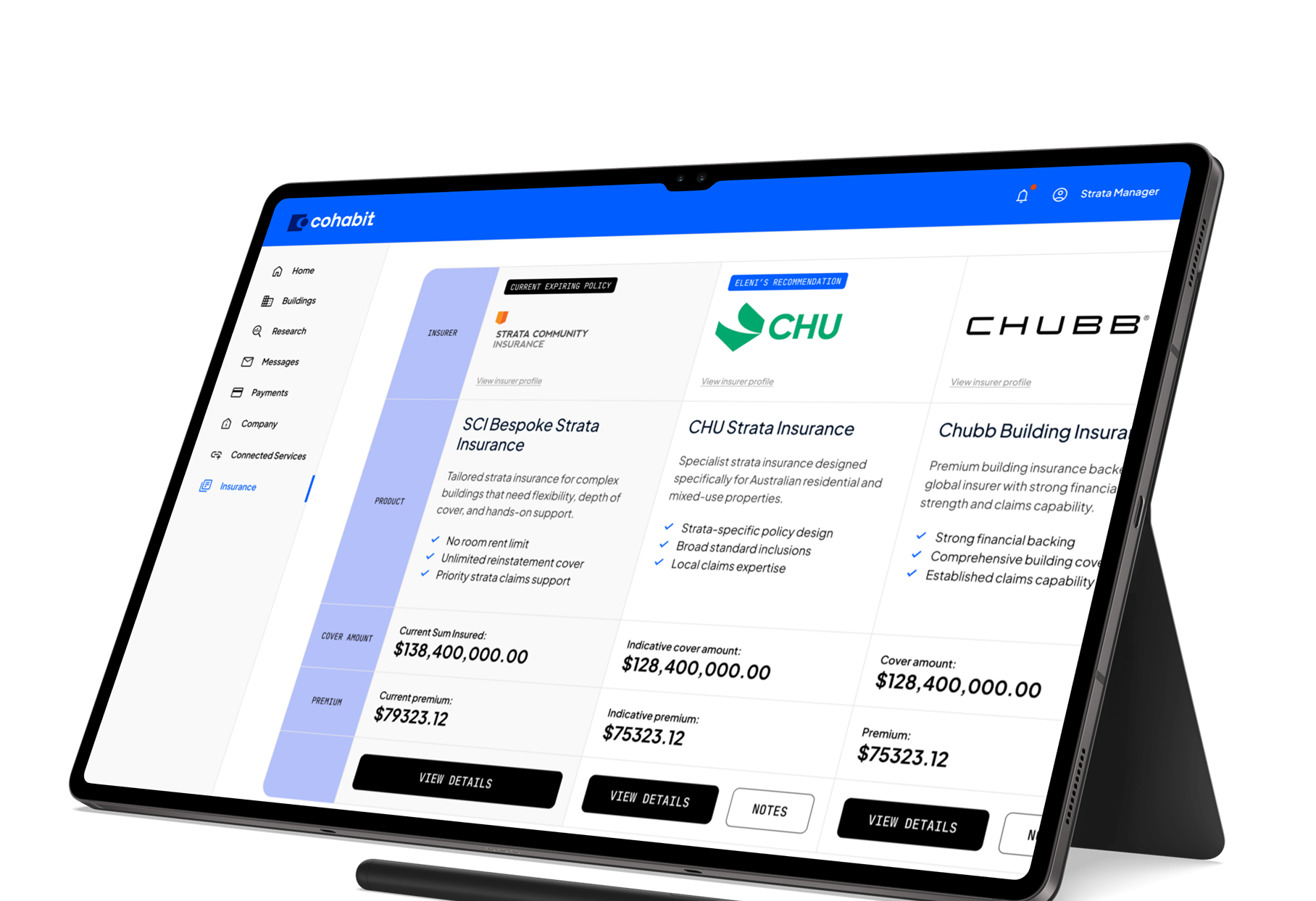

The Hidden Costs Buyers Don’t See

The purchase price gets all the attention. It’s the number on the listing, the figure you negotiate, the amount that goes on the contract.
But for apartment buyers, it’s only one part of the story. What comes after settlement can look very different from what you expected.
Why ownership costs can change after you move in
When you buy into a strata building, your ongoing costs are tied to the building’s needs, not just your own. Your levies help fund building insurance, common area maintenance and future capital works.
Those levies can, and often do, change. Sometimes significantly.
A new building with low levies might look attractive. But low levies aren’t always a sign of efficiency. Sometimes they’re simply tomorrow’s costs arriving late.
Special levies: the bill nobody budgeted for
A special levy is what happens when the building needs money it doesn’t currently have. The owners corporation raises additional funds and every owner contributes their share, payable within a set timeframe, often months, sometimes weeks.
The triggers are usually things that have been building for some time. Major structural repairs. Fire safety upgrades. Waterproofing failures. Defect rectification.
In serious cases, special levies can run into the tens of thousands per lot. You won’t always know one is coming. But the signs are often there in the building’s records, if you know where to look.
Insurance premiums are rising and owners feel it
Building insurance is one of the largest expenses in many strata budgets, and premiums have risen sharply in recent years.
Buildings with a history of claims or higher risk exposures often experience larger increases. Higher premiums eventually flow through to owners in the form of higher levies.
And unlike your contents insurance, this isn’t something you can shop around for individually. You inherit the building’s insurance position when you buy in.
Deferred maintenance doesn’t stay deferred forever
Buildings age. Paint deteriorates. Waterproofing fails. Lifts wear out. Facades need attention.
When maintenance is delayed, the problem doesn’t disappear. It simply becomes more expensive later.
A building with a history of deferred maintenance is often a building where future owners end up paying for decisions made in the past.
The listing price doesn’t tell the full story
None of this means apartment ownership is a financial trap. Many buildings are managed well, levies are reasonable, and costs are predictable.
But the buildings that aren’t can be difficult to identify from a listing alone. The purchase price tells you what the market thinks the apartment is worth today. It tells you almost nothing about what owning it may cost tomorrow. It won’t tell you the balance of the capital works fund. It won’t tell you the claims history. It won’t tell you whether major works are already being discussed by the committee.
That information exists. Most of it sits inside the strata report. The challenge is knowing where to find it and what it means.
Cohabit helps you understand what’s in it. Because understanding what you’re buying isn’t just about the apartment. It’s about understanding the full cost of owning it.
Get the full picture before you buy.
The apartment is only part of what you’re buying into. A Cohabit strata report independently reviews the building’s finances, levies, insurance, maintenance, defects and disputes, helping you understand the potential risks and costs before you commit.